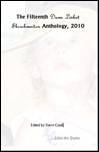
The entire title of this post should read “A Little Inspiration with Coffee House Fiction Anthology 2010 and May Kuroiwa.”But that’s rather long for a title-and May knows a little something about titles.
May Kuroiwa is visiting here today on the WOW blog tour as one of the judges for the Coffee House Fiction Anthology. This anthology is made up of the winners of the fifteenth Dame Lisbett Throckmorton Fiction Writing Contest. These short stories are the best of the best, a variety of genres and subjects sure to inspire you on your own writing journey.
And May is sure to inspire you, too. She’s stopped in to answer a few writing questions, on a variety of different subjects.
1. May is currently pursuing an MFA in a low-residency program offered by Warren Wilson College. What influenced your decision to take on an MFA program when you were published and already enjoying literary success?
If my final measure of writing success was to be published, then seeing one of my stories in print would have been enough and I’d have moved on to other easier projects–like learning how to firewalk. But I want to tell stories and do my best at making them accessible to readers. That means pursuing craft by attending conferences and workshops and taking classes, being willing to experiment with genres and tools like point of view, and searching out excellent mentors. Pursuing an MFA was the next step.
2. What’s a low-residency program and how does it differ from other programs? How do you know what’s best for you if you’re considering an MFA?
To decide whether a full-residency or a low-residency program is the best fit, consider these questions:
Do you live within commuting distance, or are willing to move close to, a full-residency program? If not, investigate low-residency programs. You only have to attend 8 – 10 day residencies twice each year.
Are you willing to build one on one mentoring relationships, and to receive your instructor’s feedback on your work by e-mail, snail-mail and over the phone? Or would you prefer a traditional in-classroom setting?
If you must continue working and have family obligations, are you disciplined enough to dedicate 25 hours minimum each week to schoolwork? Low residency semesters are six months long; you won’t get summer or winter breaks.
Can you afford the tuition? Some full-residency programs offer complete funding but it’s rare to find financial aid in low-residency.
3. May has also judged literary contests, so can you share with us what catches your eye immediately that makes you think a story or a poem might be a winner? And what makes you say “No” at first glance?
As a judge at Coffee House Fiction and for high school scholarship contests, I must say that although the first sentence is important, and that first paragraph, many writers neglect to carefully construct their titles. A story that opens with an authoritative line contained within a beautifully written paragraph, and which then fulfills on the promise of its title, just might be a winner.
First glance no-nos: colored ink or paper, strange eye-bending fonts and formats, and cute illustrations. My advice is to allow the story to stand on its own merits.
4. I’ve been watching Hawaii Five-O (the new one, but okay. I’m old enough that I watched the first one, too) and I find the island culture so interesting! I know you grew up in Hawaii and wonder how much of that culture finds its way into your work?
I watched Hawaii Five-O while growing up too.
The act of writing is revealing. My cultural background and the way life is unfolding and what I’ve been wondering about all influence my work. Some of my short stories include surfing, discovering the bones of ancient warriors in beach sand, and Hawaiian chants, but all my stories are about relationships. I write about that intersected space between family and friends, between a character’s self-image and the story’s reality, and the past and the present and what sort of future that relationship promises. I hope my stories can transcend cultural barriers by dealing with the issues of being human.
So now you should be good and inspired. Or should it be well and inspired? May can let me know. She’ll be dropping in today to answer any and all writing questions. Oh, and don’t forget to check out Coffee House Fiction to find out how you can order the latest anthology!